
Poor mobile signal is not just an inconvenience. It is a growing issue across modern buildings of all types.
From office environments and warehouses to apartment complexes and healthcare facilities, many properties struggle with indoor mobile reception. The reason is simple:
Modern buildings are not designed for mobile signals.
Materials such as concrete, steel, and energy-efficient glass are excellent for structural integrity and insulation, but they significantly reduce signal penetration. As a result, you can have strong reception outside and almost none once you step inside.
The issue is not your network provider. It is how your building handles signals.
When the signal drops, the impact is immediate.
- Calls cut out mid-conversation.
- Messages fail to send.
- Apps and systems become unreliable.
- People waste time trying to reconnect.
Over time, this leads to reduced productivity, missed opportunities, and frustration for staff, residents, and customers.
Why Poor Signal Is a Growing Problem in Modern Buildings
As buildings become more advanced, signal challenges are becoming more common.
New construction techniques focus on energy efficiency and durability, often using materials that block or reflect radio signals. At the same time, reliance on mobile connectivity has increased significantly.
Today, mobile signal is critical for:
- Communication between staff and teams
- Customer interactions and enquiries
- Mobile-based systems and applications
- Emergency contact and accessibility
This combination of higher reliance and lower signal penetration is why more businesses and property owners are now investing in dedicated signal solutions.
The Fast Fix: Cel-Fi Signal Boosters
For buildings that have some usable signal outside but struggle indoors, Cel-Fi systems provide a fast and effective solution.
Fixtel supplies and installs the CEL-FI GO G41 and G51, which are carrier-approved signal boosters designed to improve indoor mobile performance without major infrastructure changes.
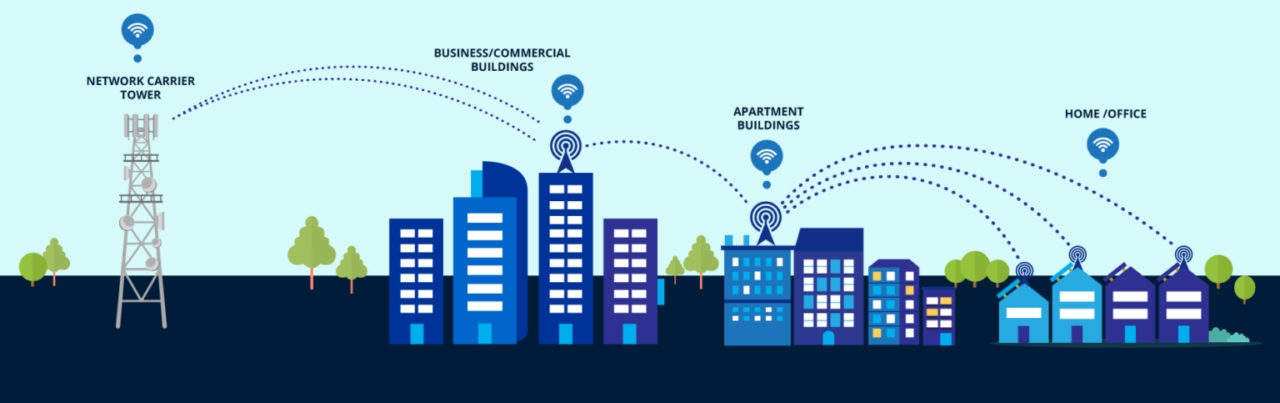
These systems work by capturing existing signals, amplifying them, and redistributing them throughout the building.
Choosing Between G41 and G51
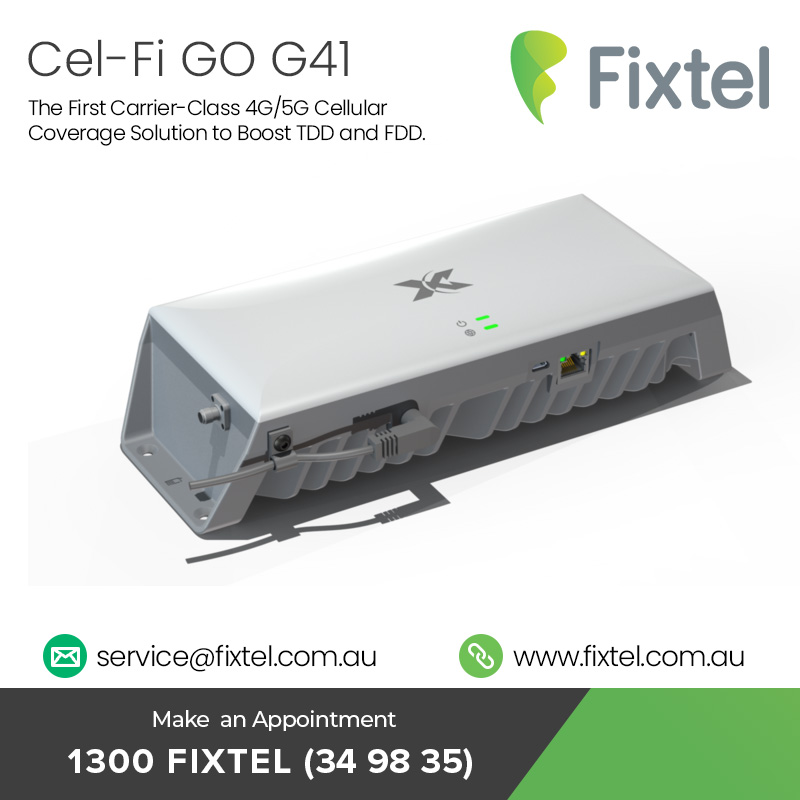
CEL-FI GO G41
Best suited to small to mid-sized environments where strong and stable 4G coverage is required. Ideal for offices, retail spaces, clinics, and smaller warehouses.
CEL-FI GO G51
Designed for higher-demand environments and future-ready infrastructure, with enhanced 5G support. Suitable for modern commercial sites, industrial facilities, and buildings with high data usage.
For larger commercial environments, Fixtel also supplies the CEL-FI QUATRA 4000e, an enterprise-grade solution designed for multi-carrier support and wider coverage.
This system is ideal for bigger buildings that need stronger performance than a single booster can provide, while still avoiding the complexity of a full DAS installation.
Where Cel-Fi Works Best
Cel-Fi is ideal for:
- Offices with patchy indoor reception
- Apartments with isolated signal issues
- Warehouses with weak internal coverage
- Retail environments where customer connectivity matters
It is a cost-effective and efficient way to quickly improve the signal, particularly when a full system is not required.
The Full-Building Solution: Distributed Antenna Systems (DAS)

When signal issues are widespread or affect large areas, Cel-Fi alone may not be enough.
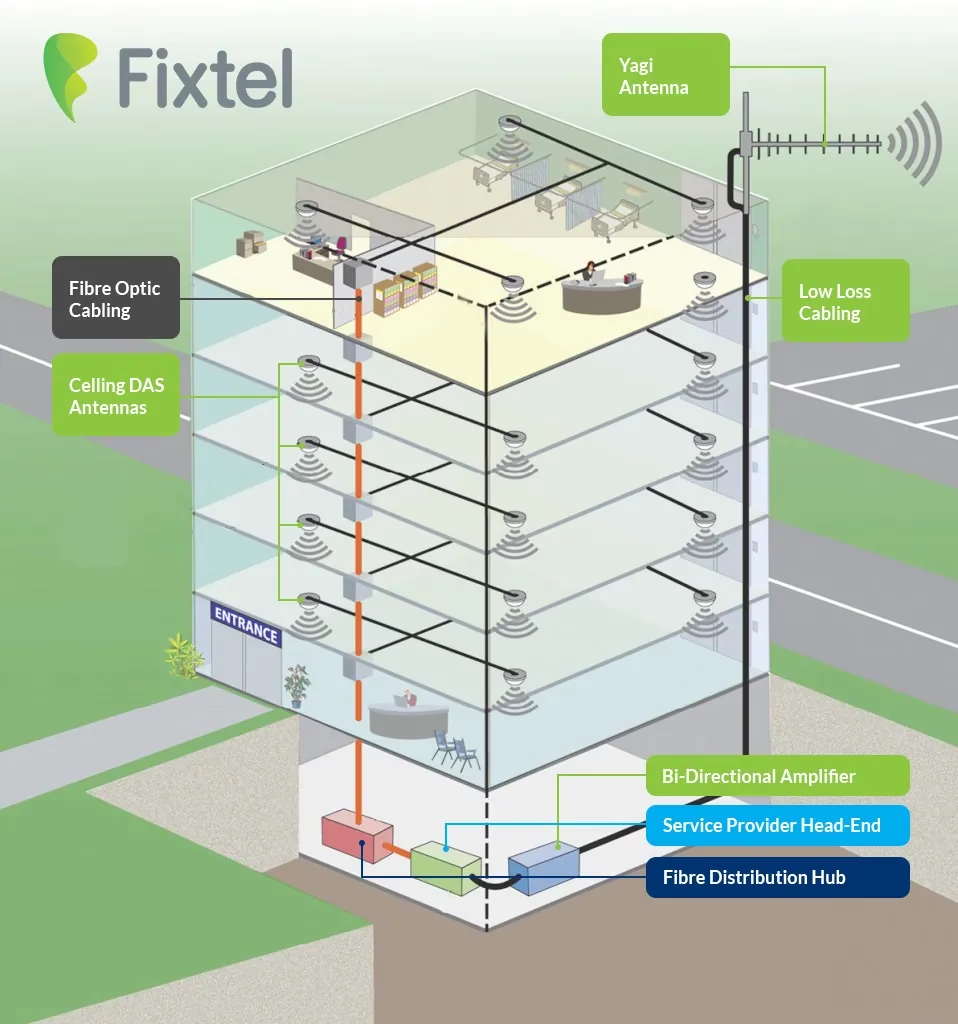
A Distributed Antenna System (DAS) is a fully engineered solution designed to deliver consistent mobile coverage throughout an entire building.
Instead of boosting the signal from a single point, DAS distributes it through a network of antennas installed across multiple areas and levels.
Where DAS Is Typically Used
DAS is commonly implemented in:
- Large office buildings
- Apartment complexes and multi-residential developments
- Hospitals and healthcare facilities
- Shopping centres and public spaces
- Industrial and warehouse environments
Why DAS Is Different
DAS provides:
- Consistent signal across all areas
- Coverage in difficult zones such as basements and lifts
- Reliable performance for large numbers of users
For larger or more complex buildings, this is the most effective long-term solution.
Industry-Specific Signal Challenges
Healthcare Facilities

Hospitals, nursing homes, and medical clinics are among the most challenging environments for mobile signal.
Thick walls, specialised materials, and complex layouts often result in poor reception throughout treatment rooms, corridors, and lower levels.
Reliable communication is critical in these environments, making consistent signal coverage essential for staff coordination and patient experience.
Residential Apartments
Poor mobile signal is one of the most common complaints in modern apartment buildings.
Residents often experience a strong signal on balconies or near windows, but little to no signal inside their units.
Without proper infrastructure, this leads to ongoing frustration, complaints, and reduced tenant satisfaction.
Office Buildings
In office environments, a poor signal directly impacts business performance.
Staff rely on mobile devices for communication, apps, and connectivity throughout the day. Weak signal leads to inefficiencies, missed calls, and disrupted workflows.
New Developments and Infrastructure
For new builds, mobile signal should be considered during the design phase rather than after construction is complete.
Retrofitting signal solutions is more complex and costly. Designing connectivity into the building from the start ensures long-term performance and avoids future issues.
Cel-Fi vs DAS: Choosing the Right Solution
The right solution depends on several factors:
- Building size and layout
- Construction materials
- Existing signal strength
- Number of users and devices
If the issue is localised and manageable, Cel-Fi is often the best starting point.
If coverage is required across multiple areas or the entire building, DAS provides a more comprehensive solution.
In some cases, a hybrid approach may be used to achieve the best result.
Start with a Signal Assessment
Every building is different, and there is no one-size-fits-all solution.
At Fixtel, we assess your building, measure signal performance, and recommend the right approach, whether that is Cel-Fi, DAS, or a combination of both.
If you are dealing with poor reception, the first step is understanding the problem properly.
Book a signal assessment walk-through and get the right solution for your building
Call 1300 FIXTEL (349 835) for a consultation today.

