

Start 2026 Strong
For many Australian businesses, technology only becomes a priority when something stops working. Until then, systems are expected to quietly keep up, even as demands increase year after year.
Now 2026 is here, and the way organisations operate continues to evolve. Cloud platforms are now standard, teams work across multiple locations, customers expect instant responses, and security threats are more sophisticated than ever. Yet many businesses are still relying on technology foundations installed years ago, built for a very different environment.
The biggest risk is not total failure. It is gradual underperformance that goes unnoticed until it starts costing time, revenue and reputation. Below are the five technology gaps businesses most often discover too late, and how addressing them early can make a measurable difference.
1. Data Cabling That Limits Performance and Growth

Data cabling is one of the least visible but most critical parts of any business network. When it works, it is ignored. When it does not, every system connected to it suffers.
Older cabling or poor installations can create bottlenecks that slow down cloud applications, file access and communication tools. Businesses often assume the problem lies with software, internet providers or devices, when the real issue is the physical layer underneath.
This gap usually appears when:
- New systems or devices are added
- Cloud usage increases
- Staff numbers grow, or roles change
Without cabling that supports modern speeds and future expansion, upgrades elsewhere become ineffective. Reviewing cabling early avoids costly rework and disruption later.
2. WiFi That Has Not Kept Up With the Workplace

WiFi requirements have changed dramatically. Offices now support more devices per user, higher bandwidth applications and flexible workspaces. Many WiFi networks were never designed for this level of demand.
Businesses commonly experience:
- Inconsistent connectivity across the building
- Poor performance during meetings or peak hours
- Staff frustration and reduced productivity
What makes this gap dangerous is that it grows slowly. Small issues become accepted as normal until they significantly impact daily operations. A properly designed WiFi environment improves reliability, supports growth and removes a major source of frustration for staff.
3. Phone Systems Struggling With Modern Work Patterns
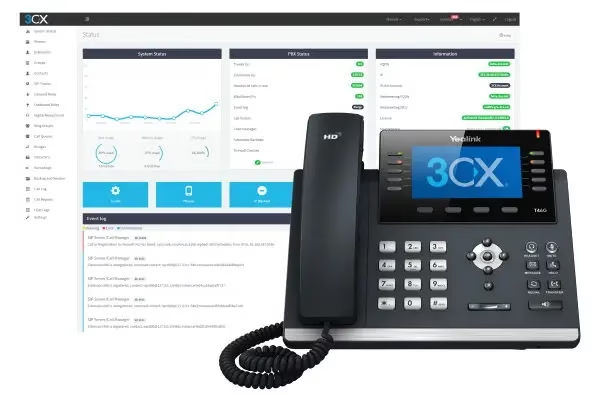
Traditional phone systems were built for fixed desks and predictable call flows. Today, businesses operate very differently.
Hybrid work, mobile staff and customer expectations for fast response have placed new demands on voice systems. When phone platforms are not designed to support this, businesses face:
- Missed or dropped calls
- Poor call quality outside the office
- Limited visibility into call performance
Communication problems directly affect customer experience and internal efficiency. Modern voice solutions should adapt to how people work, not force businesses to work around technology limitations.
4. Indoor Mobile Coverage That Impacts Productivity

Indoor mobile signal is an issue that many businesses underestimate until complaints become impossible to ignore. Modern building materials, office layouts and equipment often interfere with mobile signals.
Poor indoor coverage leads to:
- Missed calls and delayed responses
- Staff stepping outside to take calls
- Safety risks in critical environments
In industries such as healthcare, logistics and manufacturing, reliable mobile connectivity is essential. Addressing coverage issues proactively improves both productivity and safety while supporting a better customer experience.
5. Security and Network Visibility Gaps

As technology environments grow more complex, visibility and security often fail to keep pace. Businesses may not know what is happening on their network until something goes wrong.
Common challenges include:
- Limited monitoring of performance and issues
- Reactive responses instead of early warnings
- Uncertainty around security posture and risk exposure
This gap is often discovered after an outage or security incident, when the impact is already felt. Proactive monitoring and managed security provide peace of mind and allow issues to be addressed before they escalate.
Why These Gaps Are Missed
Most businesses are focused on day-to-day operations. Technology that appears to be working is rarely questioned. However, gradual change is exactly what makes these gaps difficult to spot.
Growth, new tools and evolving work patterns place pressure on systems that were never designed for them. Without regular reviews, weaknesses remain hidden until performance drops or failures occur.
Getting Ahead With a Technology Review
A structured technology review helps businesses understand where they stand and what needs attention. It separates urgent risks from longer-term improvements and provides clarity for planning.
Benefits include:
- Reduced risk of unplanned downtime
- Better performance across systems
- Clear upgrade pathways aligned with business goals
- Greater confidence moving into 2026
Most importantly, it allows businesses to act on their own terms rather than in response to a crisis.
Let Fixtel Help Grow Your Business in 2026

Technology should support your business, not quietly limit it. If your infrastructure has not been reviewed recently, there is a strong chance that hidden gaps exist. Addressing them early is one of the simplest ways to protect productivity, improve reliability and prepare for the demands of 2026. Fixtel helps businesses identify and close technology gaps before they become costly problems. Talk to us about starting 2026 with confidence.

